
IBMA Announces 2026 Bluegrass Music Hall of Fame Inductees
The International Bluegrass Music Association (IBMA) recognizes those whose lifelong contributions have shaped the genre through induction into the Bluegrass Music Hall of Fame, considered the highest honor in bluegrass music.
2026 Bluegrass Music Hall of Fame Inductees:
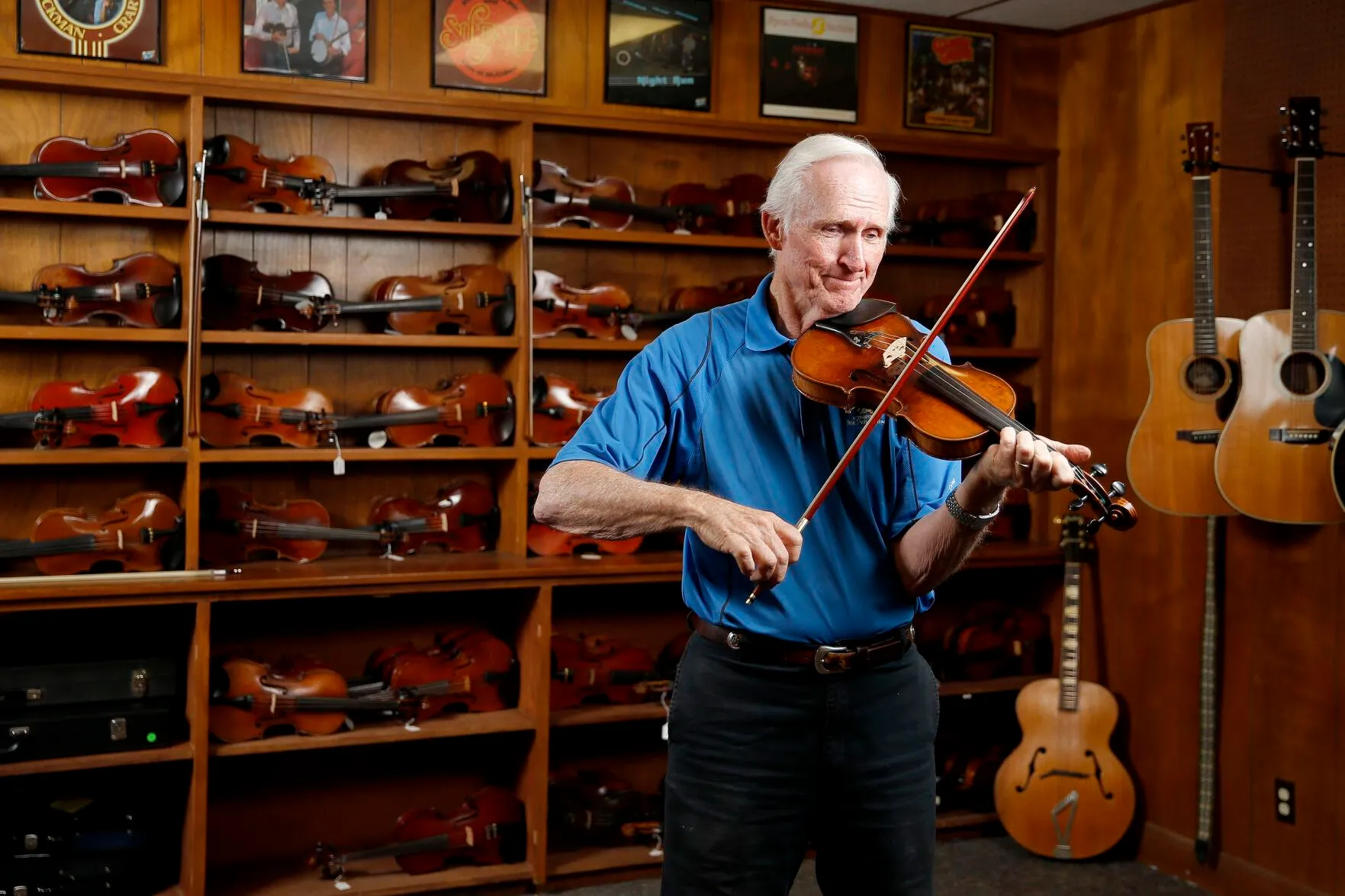
BYRON BERLINE (July 6, 1944 – July 10, 2021) was a multi-instrumentalist who played music for over seventy years. He is known primarily for his fiddle work but also played mandolin and guitar. Born in Caldwell, Kansas, he grew up in Oklahoma and started out on fiddle at age five. Byron’s father, Lue Berline, was a championship old-time fiddler. Fiddle albums by Tommy Jackson and Howdy Forrester informed his playing; as he discovered bluegrass, Chubby Wise and Kenny Baker were big influences. In his mid-teens, Bryon began attending – and winning – regional fiddle contests. He met the Dillards in 1964 and subsequently appeared on their Pickin’ and Fiddlin’ album on Elektra. This led to his appearance with the group at the 1965 Newport Folk Festival. Although he earned a B. A. in Physical Education from the University of Oklahoma, he made a career in music. In 1966/’67, Byron worked for Bill Monroe and recorded three tunes: “Gold Rush,” “Virginia Darling,” and “Sally Goodin’.” During a two-year stint in the Army (1967-1969) he was assigned to Special Services and was afforded numerous opportunities to play music. Shortly before being discharged, he received a request from Doug Dillard in California to help with the recording of an album. It was the start of a musically-active twenty-six-year stay out west. His associations there included Dillard & Clark, 1969-1970; Dillard Expedition, 1970-71; Country Gazette (which he co-founded and with which he recorded several influential albums including Traitor in our Midst and Don’t Give Up Your Day Job), 1971-75; Sundance, 1975-85; Berline, Crary & Hickman, 1978-90; L. A. Fiddle Band, 1978-93; and California, 1990-96. Byron was also an in-demand session player and appeared on recordings by The Byrds, The Eagles, The Rolling Stones, Bob Dylan, John Denver, Elton John, Vince Gill, Emmylou Harris, Jethro Burns, John Hartford, Nitty Gritty Dirt Band, Don Reno, and Earl Scruggs. Byron returned to Oklahoma in 1995 and organized the Byron Berline Band. He also opened the Double Stop Music Shop in Guthrie. He was inducted into the Oklahoma Musicians Hall of Fame and was the driving force behind the Oklahoma International Bluegrass Festival.
The NASHVILLE BLUEGRASS BAND (NBB), formed in 1984 by Alan O’Bryant and Pat Enright in Nashville, quickly became known for its soulful harmonies, inventive arrangements, and deep respect for traditional bluegrass. Their early albums, such as My Native Home and Idle Time (produced by Béla Fleck), showcased a unique blend of bluegrass, blues, and gospel, setting them apart with sparkling vocal arrangements and outstanding instrumental work. NBB’s approach was rooted in both authenticity and innovation. The group revived neglected songs, reintroduced blues elements that had faded from bluegrass, and drew inspiration from both black and white southern gospel traditions. Their a cappella gospel performances, influenced by Black church music, became a signature feature, broadening the horizons of bluegrass audiences. The band operated democratically, with all members contributing to arrangements and performances, fostering a cohesive ensemble sound that emphasized group unity over individual showmanship. Internationally, NBB broke new ground by becoming the first bluegrass band to perform in the People’s Republic of China in 1986, demonstrating music’s ability to bridge cultural divides. Their tours also reached Japan, Europe, and Brazil, earning them global acclaim. Domestically, they performed at prestigious venues like the Grand Ole Opry and Carnegie Hall, and their music appeared on major film soundtracks, including O Brother, Where Art Thou? The band’s lineup featured some of bluegrass’s most respected musicians. Alan O’Bryant contributed a clear tenor voice, innovative banjo style, and songwriting talent—his song “Those Memories of You” became a hit for The Trio (Emmylou Harris, Linda Ronstadt, Dolly Parton). Pat Enright provided a bluesy lead voice and steady rhythm guitar. Mike Compton’s mandolin, influenced by Bill Monroe, added rhythmic drive and bluesy phrasing. Mark Hembree anchored the group with solid bass and vocals, drawing on experience with Bill Monroe’s Blue Grass Boys. Fiddler Stuart Duncan, joining in the band’s second year, became renowned for his inventive playing and later became a top Nashville session musician. Later members like Roland White and Gene Libbea further enriched the band’s sound. NBB has earned two Grammy Awards, multiple IBMA Vocal Group of the Year honors, and widespread recognition for its artistry and innovation.
BARRY LYLE POSS (September 7, 1945 – May 13, 2025) came from Canada in 1960, with a fellowship and a student visa, to obtain a doctorate degree in sociology at Duke University in North Carolina. Within one chapter of completing his dissertation, Poss answered a classified ad for a graphic artist placed by County Records, a small Virginia-based label. Though Poss didn’t know anything about graphic design, David Freeman hired him anyway, and Poss gave up teaching to follow music, his main passion. After three years of immersion in the record business, Poss and Freeman launched the Sugar Hill label in 1978. Poss acquired full control in 1980. He wanted a strong label identity with a “signature sound” that stood for great artists and quality production, much the same as Sam Phillips had achieved with Sun Records. While traveling around rural areas in the South, Poss became intrigued by the music of the children and grandchildren of the mountain musicians he visited and saw how they were influenced as much by old-time and bluegrass music as by rock, country and other new forms of music. Ricky Skaggs perfectly personified this tension. Sugar Hill’s first album was by Boone Creek, featuring Skaggs and Jerry Douglas. The success of that record begat a Ricky Skaggs solo effort, Sweet Temptation, followed by a joint effort with Epic Records on Skaggs’s Don’t Cheat in Our Hometown. That record helped pave the way for a neo-traditional movement in mainstream country music. With an early emphasis on bluegrass and folk music, Sugar Hill released some of the most critically acclaimed albums of the 1980s and ‘90s. They first brought Chris Thile and Nickel Creek to worldwide attention and released albums for the Lonesome River Band, Dolly Parton, the Seldom Scene, Hot Rize, Sam Bush, the Infamous Stringdusters, Ronnie Bowman, New Grass Revival, Red Clay Ramblers, Steve Martin, Bryan Sutton, Doc Watson, and many others. Non-bluegrass luminaries of the label Townes Van Zandt, Guy Clark, and Robert Earl Keen. Sugar Hill Records, under Poss, is credited with twelve Grammy winning projects. Poss sold Sugar Hill to the Welk Music Group in 1998, and the label was subsequently purchased by Concord Music Group in 2015. Poss was presented the IBMA’s Distinguished Achievement Award in 1998.
THE LOST & FOUND carved a unique niche in the bluegrass music scene since its formation in 1973. The band was born out of a jam session among four friends – Allen Mills, Gene Parker, Dempsey Young, and Roger Handy – who shared a mutual love for bluegrass music. The name “Lost & Found” was conceived by Mills, symbolizing how the members had been “lost” in other bands and had now “found” themselves in this new bluegrass ensemble. By 1975, they had released their first album, First Time Around, on Outlet Records. The debut disc featured original songs that were written by Mills, including “Love of the Mountains” and “If Today Was the Last Day.” The band’s music, a blend of traditional and modern bluegrass, quickly resonated with fans. The lineup of the Lost & Found saw changes over the years, but the core members-Mills, Parker, and Young – remained pivotal in shaping their sound. Mills, the group’s manager and stand-up bass player, was known for his high tenor voice and engaging stage presence. Parker’s banjo picking, influenced by legends like Earl Scruggs and Allen Shelton, added a dynamic edge to their music, while Young’s mandolin playing brought a swing-influenced flair. The music of the Lost & Found was heavily influenced by bluegrass greats such as Flatt and Scruggs, Bill Monroe, and the Stanley Brothers. They also drew inspiration from contemporary groups like the Country Gentlemen and Seldom Scene. This blend of influences helped them create a sound that was both rooted in tradition and refreshingly innovative. The band’s ability to mix traditional tunes with original compositions and songs from other genres made their music appealing to a wide audience. Throughout the late 1970s and 1980s, the Lost & Found played at numerous bluegrass festivals and shows across the United States, earning a loyal fan base. They also toured internationally, performing in countries like Sweden, Holland, Denmark, Germany, and Switzerland. Their infectious enthusiasm and down-to-earth style endeared them to audiences worldwide. In 1980, the band signed with Rebel Records, which provided them with national distribution and further solidified their place in the bluegrass world. Over the years, they released several albums on Rebel, including Sun’s GonnaShine, The Deal, Hymn Time, and It’s About Time. Co-founder Allen Mills received an IBMA Distinguished Achievement Award in 2019.
In addition to these honorees, the IBMA recognizes individuals and organizations whose significant contributions to the advancement of bluegrass music are honored through the Distinguished Achievement Awards.
2026 IBMA Distinguished Achievement Award Recipients:
GALLAGHER GUITARS was founded in 1965 by master cabinetmaker J.W. Gallagher in Wartrace, Tennessee. The company has spent over six decades cementing its legacy as a cornerstone of American acoustic craftsmanship. Transitioning seamlessly from custom furniture to elite instrument construction, the family-owned company revolutionized the bluegrass landscape. By refining traditional body designs to optimize projection, clear note definition, and a beautifully balanced tone, Gallagher transformed the acoustic guitar from a strictly rhythm instrument into a powerful voice for lead melody. Their legendary instruments quickly captured the hearts of iconic musicians, most notably Doc Watson, who famously endorsed his beloved Gallagher “Ol’ Hoss.” Owners David and Reina Mathis continue to steer the company forward with the same uncompromising dedication to hands-on craftsmanship and premium, aged woods that are among the hallmarks of Gallagher Guitars.
Fiddler MATT GLASER has spent decades redefining bluegrass music by dissolving the boundaries between traditional string styles, jazz, and classical music. Emerging in the late 1970s, Glaser pioneered the urban “jazzgrass” scene with groundbreaking ensembles like the Central Park Sheiks, Fiddle Fever, and celebrated twin-fiddle recordings with Kenny Kosek on the album Hasty Lonesome. An influential educator and historian, Glaser became chair of Berklee College of Music’s String Department in 1980, later founding their acclaimed American Roots Music Program to champion improvisation. His multi-genre mastery led to high-profile work with filmmaker Ken Burns, traditionalist Hazel Dickens, and the ensemble The Wayfaring Strangers. In 2013, Glaser made history as the first non-classical instructor awarded the prestigious American String Teachers Association’s Artist Teacher Award, cementing his profound, enduring impact on acoustic music.
DEREK HALSEY is an award-winning journalist, editor, copy writer, and interviewer/biographer whose work has contributed mightily to bluegrass. His writing has been published in Bluegrass Unlimited magazine (where he has over 100 articles to his credit), The Mountain Times, the Herald Dispatch, Cincinnati’s City Beat, Kudzoo magazine, and Gritz Music Magazine, which he helped launch and served as Editor-At-Large. Born in West Virginia and raised in Ohio, Halsey’s history with the music began in childhood by hearing Roland and Clarence White, the Dillards, Flatt and Scruggs, and the Grand Ole Opry on AM radio. Additionally, he is a guitar player who twice made the finals of the Non-Traditional Band Contest at the Clifftop Appalachian String Band Festival, noting that his time onstage helps him write about music.
The MARSHALL FAMILY burst on the bluegrass music scene in the spring of 1974. They made an unannounced cold-call audition at the home of Ralph Stanley, who instantly became their biggest supporter. He booked the group on his Memorial Day bluegrass festival and actively pitched them to other promoters. Stanley even coordinated their signing with Rebel Records. The group, Ohiotransplants from West Virginia, was comprised of elder Chester “Pop” Marshall and his children. Siblings David on banjo and Judy on guitar acted as co-leaders of the group. Both were creative writers and Judy’s clear, soaring vocals were a key element of the band’s sound. Rounding out the group were brothers Danny on mandolin and Ben on acoustic bass. Although the original group disbanded by the end of the 1970s, interest in their music remains strong even to this day.
GARY REID was bitten by the bluegrass bug in 1974. It has consumed him ever since. Never one to passively enjoy music, he is very much a do-er. Fresh out of the chute, he embarked on what turned out to be a 39-year research project that he published as The Music of The Stanley Brothers. He was the debut bass player for the Johnson Mountain Boys. In 1978, he founded Copper Creek Records and over the years released 175 albums and CDs. He also logged 20 years as the publisher of the Bluegrass Calendar. From 1983 to 1996, he served as the office manager for Rebel Records. More recently, as part of his obsession for All-Things-Stanley, he wrote and performs a one-man play called A Life of Sorrow – the Life and Times of Carter Stanley.
Winners of the 2026 IBMA Bluegrass Music Awards will be announced at the 37th Annual IBMA Bluegrass Music Awards, presented by Get It Played, on Thursday, October 22, 2026, at the Soldiers and Sailors Memorial Auditorium in Chattanooga, Tennessee.
Nominees for the 2026 IBMA Momentum Awards, which recognize artists and industry professionals in the early stages of their bluegrass music careers, and the 2026 IBMA Industry Awards will be announced during the week of July 20.
Tickets for the IBMA Bluegrass Music Awards and other IBMA World of Bluegrass® events are currently on sale. For more information, including ticket options and pricing, visit worldofbluegrass.org.
Awards are determined by the professional membership of the International Bluegrass Music Association (IBMA), the nonprofit trade organization that connects and empowers bluegrass professionals.
The IBMA Bluegrass Music Awards, presented by Get It Played, is just one part of IBMA World of Bluegrass®, which runs October 20-24, 2026. The week, the most important in bluegrass, encompasses four events: the IBMA Business Conference, presented by Riverview Foundation, Oct. 20-22 at the Chattanooga Convention Center; the IBMA Bluegrass Ramble presented by Coca-Cola Bottling Company UNITED-CHATTANOOGA, Oct. 20-21 in downtown Chattanooga venues; the 37th Annual IBMA Bluegrass Music Awards, presented by Get It Played, Oct. 22 at the Soldiers and Sailors Memorial Auditorium; and IBMA Bluegrass Live!®, presented by Chattanooga Tourism Co. Oct. 23-24, a two-day festival of live performances and fan experiences.